
Return to the Sedgewick has an easy advantage: the player walks in already carrying a memory of the earlier hotel chapter. The game does not have to waste time explaining why the place matters. It can spend that energy showing how much worse things have gotten.
Quick guide links
- Realistic / HD Campaign / Walkthrough for the full mission map on this branch.
- Realistic / HD Version Guide if you want the bigger branch overview.
- Level 6 transcript if you want the dialogue and cutscene order for this chapter.
- Tools of the Trade and Tips for Rookie Ghostbusters if a gadget gate, boss, or combat stretch is slowing you down.
- Previous chapter: Museum of (Super)Natural History
- Next chapter: Lost Island Rising
Playable walkthrough
Return to the Sedgewick works better once you stop thinking of it as a normal hotel mission. The whole chapter is haunted-space logic: escort the manager to the backup power route, survive the kitchen blowup, then trust the warped upper floors to tell you where the Spider Witch wants you to go.
Before you start
- Keep Shock Blast, Slime Tether, and the P.K.E. Meter ready. The chapter keeps bouncing between quick ghost control and environmental fixes.
- If the 12th floor starts feeling impossible to map, that usually means you should follow the spectral clue in front of you instead of treating every door equally.
Step-by-step walkthrough
- Clear the first black-slime pocket, then regroup and head for the blocked elevator. After the harmless ghost echoes, take the first left, clean out the slime-coated side area, and rejoin the team. The elevator failure and ruined stairs are the chapter’s way of forcing you toward the hotel manager and the kitchen route.
- Follow the manager toward the backup generator and do not overcomplicate the lower hotel. Go up the short stair run, stay with the manager, and push through the kitchen-side corridors while dealing with Webbed Fiends as they appear. Shock Blast is the fast answer here, especially when they try to lunge in cramped spaces.
- Open the generator room from the kitchen side and restore power cleanly. In the kitchen, drag the metal appliance out of the way if you want the side pickup, then head to the generator room tucked into the right corner. Go downstairs, hit the power switch, and remember that the water is now live. Use the Slime Tether on the hanging electrical fixture in the water and pull it up to the ceiling so you can escape safely the way you came in.
- Treat the kitchen fight like a crowd-control problem, not a duel. Chef DeForrest and the Cook Ghosts are dangerous because the room is full of moving junk and crossfire. Stay near the generator-side space where you have room to read the attacks, revive teammates quickly, and focus ghosts down one at a time instead of spraying damage all over the kitchen.
- Before riding up, sweep the lower hotel only if the game clearly points you to something. Near the front side of the hotel, the P.K.E. Meter can reveal a hidden room packed with black slime. Clear it if you want the extra find and the cleanup reward, then head back to the elevator. Otherwise, do not let the optional detour break the mission’s momentum.
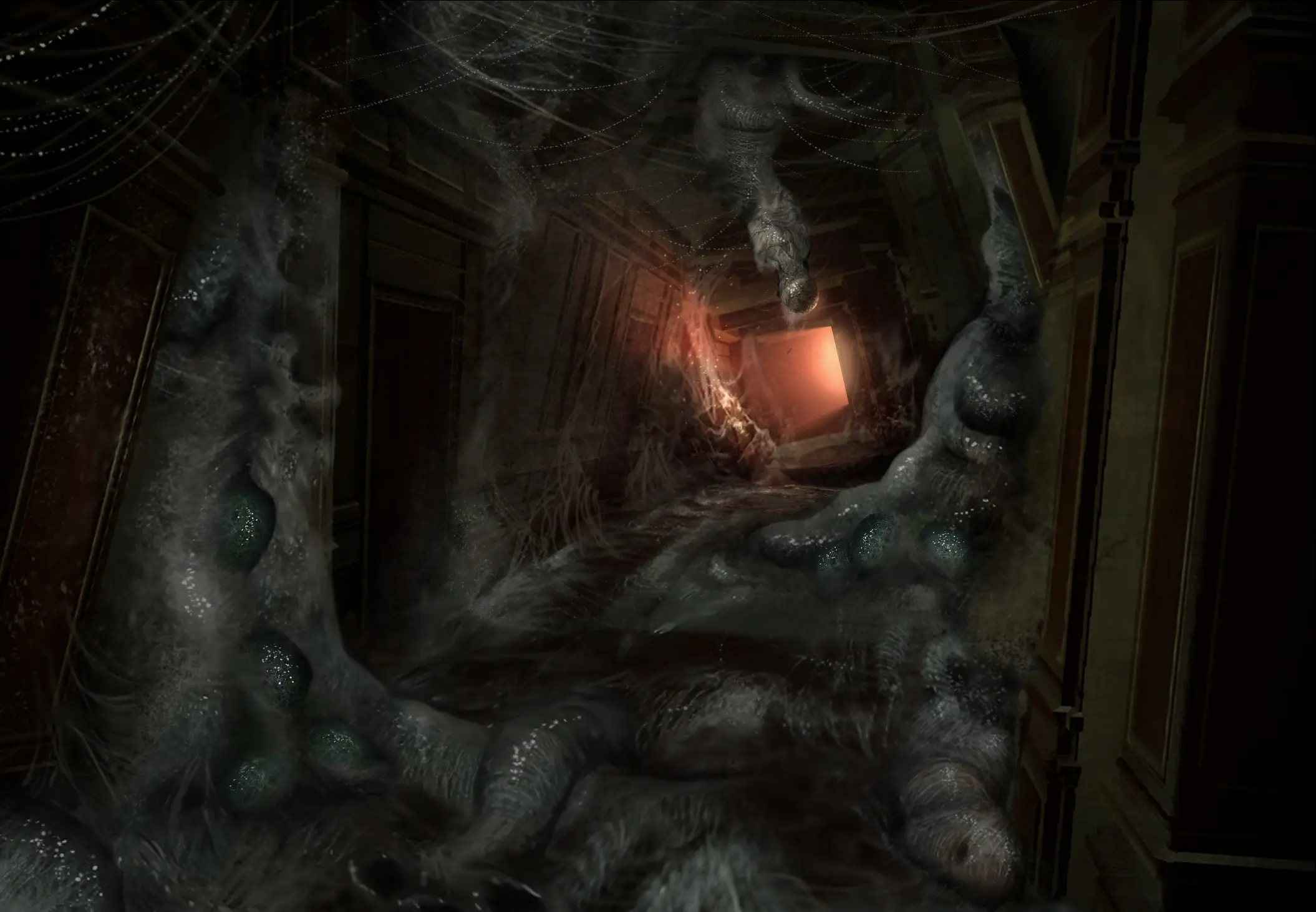
- On the 12th floor, let the warped space lead you toward the Spider Witch’s room. Check the obvious suites as the team moves, but once Egon comments on the floor’s transformation, stop expecting normal room order. Take the newly available turn, follow the active hall instead of the decorative dead ends, and keep clipping Spider Crawlers before they pile up behind you.
- When the web-covered room stalls the search, scan it and force the entrance open. Egon’s uncertainty is your cue that the room itself is the puzzle. Use the P.K.E. tools on the heavily webbed chamber, reveal the correct entry, and clear it with the Slime Blower instead of pacing the hallway looking for a more ordinary door.
- Inside the lair, hunt the Spider Witch with the meter and interrupt every recharge attempt. She likes to vanish, reposition, and start building herself back up. The safest rhythm is: locate her with the P.K.E. reading, hit her with Boson Darts or Shock Blast, then immediately reacquire her if she slips away. If you let her sit unpressured, the fight lasts much longer than it needs to.
- Keep the floor clear enough to move while you finish her off. The fight is not hard because of her health. It is hard when webs, crawlers, or room clutter pin you in place. Preserve an escape lane, stay close enough to a teammate for quick revives, and keep collapsing her recovery windows until the room finally settles.
What usually trips players up
- The generator-room escape is the part most likely to cause a silly death: once the power is on, get that live fixture out of the water before you do anything else.
- The upper hotel rewards obedience, not exploration. When the floor twists, follow the active haunt instead of trying every regular-looking room.
The return visit
Revisiting a location can feel lazy if a game has nothing new to say. This chapter avoids that problem because the hotel is no longer just a fun early haunting. It has become a measuring stick for escalation.
The first Sedgewick mission says, this place is haunted. The return visit says, the city’s whole ghost problem is no longer containable in the way it was before.
Familiarity and tension
One of the best things about a return trip is that the space is no longer unknown. That means the chapter can create unease in a different way. Instead of asking what is around the next corner, it asks what has changed since the last time the team was here.
That kind of tension is useful. Familiarity does not make the location safer. It makes the damage easier to read.
Why the return to the hotel works
- how the chapter uses an already memorable location to show larger escalation
- how the return to the hotel feels less playful and more ominous than the first visit
- how the campaign uses repetition with purpose instead of padding
- how much stronger a location can feel once the player already knows its layout and mood
The campaign pacing
The campaign needs moments where earlier material pays off in a changed form. That is part of what makes the world feel connected instead of disposable. Returning to the Sedgewick gives the story one of those payoffs.
It also helps the back half of the game feel more personal. The city is not only filling with new trouble. Old trouble spots are becoming unstable again too.
What people remember
People remember it because it turns an already successful early chapter into something heavier. The Sedgewick is still recognizably the Sedgewick, but it no longer feels like a self-contained case file. It feels like a piece of a wider supernatural breakdown.
That is the kind of reuse licensed games often fail to pull off. Here, it works because the story has earned the return.
The chapter’s payoff
Return to the Sedgewick lands because it takes a familiar place and lets the player feel the campaign’s widening damage inside it. The hotel is not only back. It is back under worse conditions, and that tells us a lot about where the story is headed.
That is what makes the chapter feel worthwhile. It is a return, but it is not a repeat.
Be the first to comment