
Ghostbusters on the NES looks simple right up until it starts draining your money, filling your traps, and pushing the city closer to disaster while you are still deciding where to drive next.
That is the trick with this one. It mixes route planning, money management, and ghost-catching, and then, at the end, it expects you to survive Zuul’s building too.
Once you understand the loop, the game gets a lot less mysterious. This guide walks through the full run, points out the decisions that matter most, and helps you avoid the mistakes that usually wreck an otherwise decent game.
Quick rules the game barely explains
Before you head out, keep these in mind:
- You can only carry four different item types at once.
- You need a Beam before you can enter haunted buildings.
- You can buy up to three regular Capture Traps, or later switch to one Super Trap with unlimited storage.
- Selling gear only gives you back half of what you paid.
- Ghost Alarm helps you spot haunted buildings from farther away.
- Ghost Food and the Anti-Ghost Suit matter much more in the endgame than they do at the start.
If the game feels unfair early on, it is usually because one of these rules was already working against you.
The full game loop
A strong run usually follows the same rhythm:
- go straight to the shop
- buy only the gear you need to start making money
- target haunted buildings without wasting fuel on long detours
- catch ghosts and cash them in
- keep an eye on trap space and the city’s PK level
- return to headquarters before greed turns into a problem
- build enough momentum for the final push to Zuul
- survive the stairway and finish the Gozer fight
Once you see that loop clearly, the game stops feeling random and starts feeling manageable.
Best opening buy
The safest opening setup is the one that gets you into buildings quickly and lets you finish captures reliably:
- Ghost Vacuum — $2,500
- Capture Beam — $3,000
- 2 Capture Traps — $2,000
Total: $7,500
If you want a little more room early on, this version also works:
- Ghost Vacuum — $2,500
- Capture Beam — $3,000
- 3 Capture Traps — $3,000
Total: $8,500
That third trap can help, but the bigger priority is making sure your first few jobs actually earn money. Fancy tools can wait.
The city map is where good runs live or die
Most bad runs do not fall apart during ghost-catching. They fall apart on the map.
A few habits matter more than anything else:
- go to the shop immediately
- favor nearby haunted buildings when you can
- run over map ghosts when it is safe
- watch your trap capacity before taking another job
- do not wander without a reason
This game punishes indecision. Fuel disappears fast, the PK meter keeps climbing, and one bad detour can turn a stable run into a mess.
How to handle the early game
Early on, do not worry about playing hero. Worry about staying efficient.
You want short trips, clean captures, and timely returns to headquarters. Long drives for a single job usually cost more than they are worth, especially if your traps are already filling up.
A good early rhythm looks like this:
- buy the core gear
- target nearby haunted buildings
- empty traps before you get greedy
- clip map ghosts when you have a clean line
- repeat until the run settles down
If you keep things controlled here, the rest of the game gets much easier to read.
Driving without wrecking your bankroll
The driving sections are where the game quietly steals your money if you get careless.
Keep your priorities straight:
- avoid other cars first
- grab fuel barrels when they are easy to reach
- collect ghosts when it is safe and useful
- keep your trips short whenever possible
You do not need perfect driving. You just need to stop turning every trip into another repair bill.
What to buy first, and what can wait
The shop matters more than a lot of players remember. Some items help right away. Some are for later. Some are only worth buying once your run is already in decent shape.
Strong early priorities
- Ghost Vacuum: useful immediately, since it lets you profit from ghosts on the map and the road
- Capture Beam: your basic ticket into haunted buildings
- Capture Traps: essential for keeping your first stretch alive
- Ghost Alarm: helpful once you want to read the city more efficiently
Good later upgrades
- Hyper Beam: worth it once you can afford the upgrade cleanly
- Super Trap: a major quality-of-life improvement if your run is stable
- Ghost Food: more important once you are planning for the Zuul climb
Endgame-focused gear
- Sound Generator: mainly an endgame tool
- Anti-Ghost Suit: helpful protection later, but not where your first money should go
If the run is struggling, random shopping usually will not save it. Better routing will.
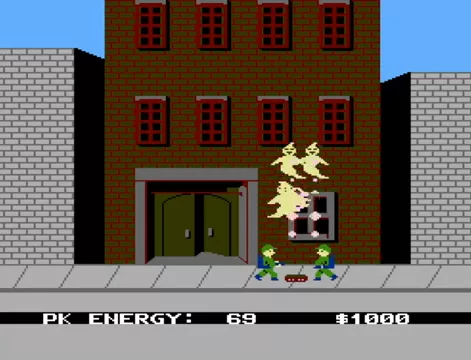
How busting works inside buildings
Once you enter a haunted building, the goal is not to panic. The goal is a clean capture.
That means:
- move your Ghostbusters into position
- place the trap where the ghost can actually be pulled across it
- line up the beam
- drag the ghost over the trap
- finish the capture cleanly
If the trap is in the wrong place, or the beam angle is off, the whole thing gets messy fast. Slow down and set it up right.
When to go back to headquarters
A lot of bad runs happen because players stay out one stop too long.
If your traps are full, or nearly full, do not pretend the next building will somehow fix the situation. Head back to HQ, unload, and reset before the run gets sloppy.
Going back to headquarters is not wasted time. It is maintenance.
A simple rule works here: if the next stop is going to leave you with no room to cash in the result, unload first.
The PK meter is always working against you
The city’s PK energy is the pressure system behind the whole game. Ignore it too long, and things get ugly.
You cannot stop that pressure completely, but you can slow it down:
- clear haunted buildings efficiently
- avoid wasting time on long drives
- run over ghosts on the city map when you get the chance
- stop wandering around without a plan
A lot of frustration in Ghostbusters on NES comes from earlier mistakes finally catching up with you.
How the Zuul endgame works
The final push is where the game stops being forgiving.
By the time you make your move on Zuul’s building, you want enough money, enough control, and enough breathing room to survive mistakes. This is where the support items that felt optional earlier start to matter.
The most useful endgame tools are:
- Ghost Food
- Sound Generator
- Anti-Ghost Suit
This is not a section you want to stumble into because the city got away from you.
Climbing Zuul’s stairway
This is one of the places where the game’s weirdness really shows.
You are trying to survive the climb while managing incoming threats, and this is where preparation pays off. Ghost Food and the Sound Generator can help keep the climb under control, while the Anti-Ghost Suit gives you a little extra margin for mistakes.
The goal here is not style points. It is survival.
Take the safer path when you can. At this point, finishing the climb matters more than looking efficient.
Battling Gozer
Once you reach Gozer, you are at the last real test.
If your earlier choices were smart, this feels like a final exam. If the run was chaotic, this is where the game collects the bill.
The biggest thing here is to stay calm. Ghostbusters on NES likes to make the ending feel more frantic than it really is. If you made it this far in decent shape, you have already done most of the hard work.
How to win
You usually win because you did the basics well:
- you bought practical gear first
- your driving stayed efficient enough to preserve money
- your trap management stayed under control
- you kept the PK meter from getting out of hand
- you reached the endgame with enough margin to survive mistakes
How to lose
Most failed runs come back to the same problems:
- buying the wrong equipment too early
- driving too long for no reason
- losing too much money to collisions
- carrying full traps and pretending it is fine
- letting the PK meter climb without enough control
- charging into the Zuul section before the run is ready
Best order to learn the game
If you are still getting comfortable with it, learn the game in this order:
- the opening shop visit
- city-map routing
- safe driving
- clean building captures
- trap timing and HQ returns
- the Zuul endgame
- the Gozer finish
Once the first four start feeling natural, the whole game gets much easier to manage.
Support pages for Ghostbusters on NES
If you want to go deeper on a specific part of the game, these pages break the run into the pieces players usually struggle with most: