
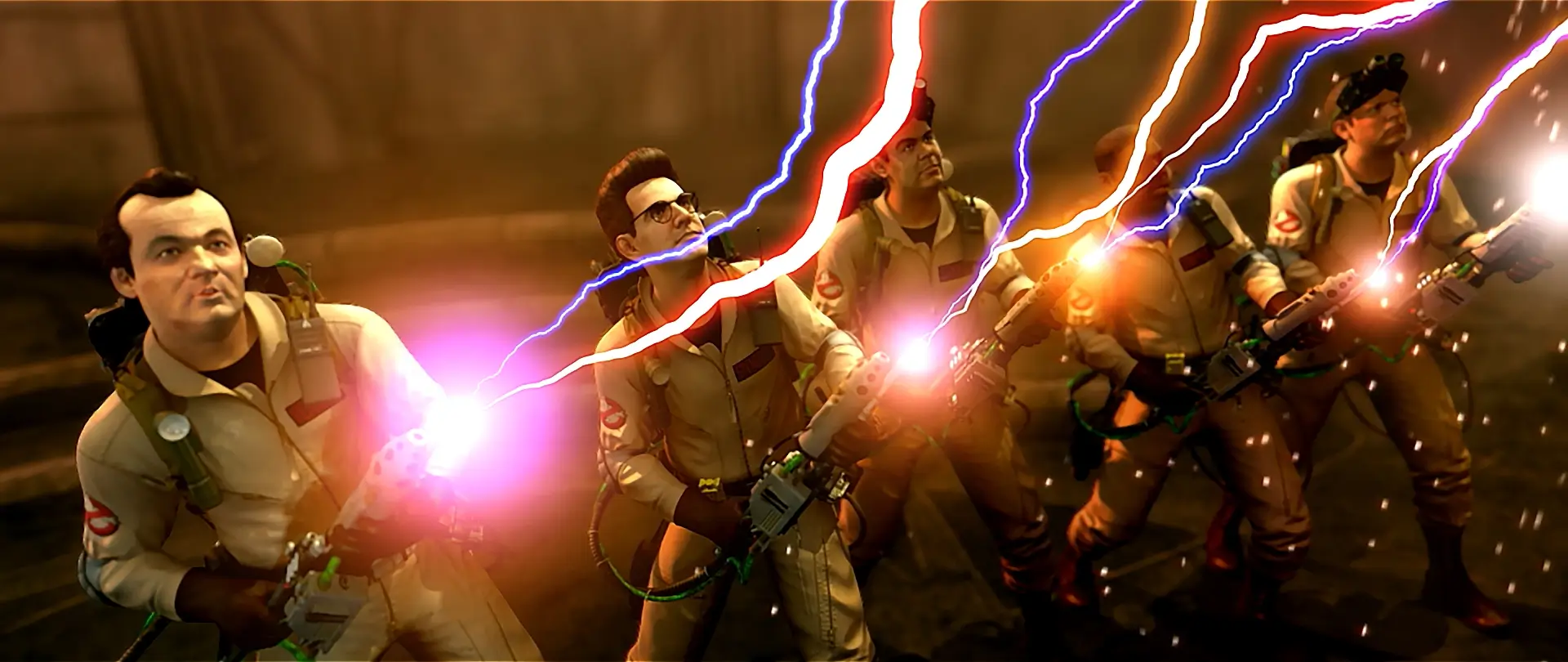
Ghostbusters: The Video Game works because the campaign actually cares who is in the room. The original team still has its rhythm, the Rookie gives the player a way in, and the haunting only lands because the humans, villains, and ghost personalities all leave a mark.
It covers the named human cast, the main supernatural antagonists, and the ghost personalities players are most likely to remember after the credits. Broad enemy classes still live in Tobin’s Spirit Guide. For the actor roster behind them, use The Cast.
Character pages in this section
The playable team and the people closest to the job
The Rookie
The Rookie is the player’s doorway into the team. He barely talks, but that silence is functional rather than empty. It lets the player stand beside the original Ghostbusters without elbowing any of them out of their own sequel.
Dr. Peter Venkman
Venkman is still the fast mouth of the group. He undercuts panic with sarcasm, flirts when he should not, and keeps scenes from getting too self-important.
Dr. Raymond Stantz
Ray is the believer and resident enthusiast. When the game leans into lore, occult history, or the pure thrill of finding something weird, Ray is usually the voice carrying that energy.
Dr. Egon Spengler
Egon remains the scientific spine of the operation. He translates paranormal chaos into field instructions, gear upgrades, and clean explanations that keep the player oriented.
Winston Zeddemore
Winston feels especially valuable here because the game lets him be practical, observant, and fully part of the core team dynamic. He grounds the campaign without flattening the fun.
Janine Melnitz
Janine keeps the Firehouse from feeling like a hollow menu hub. Her attitude is intact, her timing is still sharp, and she gives the whole operation a real workplace texture.
Dr. Ilyssa Selwyn
Ilyssa is the game’s main civilian anchor and the story’s cleanest connection to Shandor history. Without her, the plot would have plenty of ghosts but a lot less emotional pull.
Walter Peck
Peck is back to do what Peck does best: bring bureaucratic friction into a paranormal emergency. He is not just a cameo. He is a reminder that the Ghostbusters never fight only the supernatural.
Mayor Jock Mulligan
Mulligan helps the haunting feel citywide. He does not dominate the game, but he brings the public-pressure side of the crisis into frame.
The bigger forces behind the haunting
Ivo Shandor / Shandor the Architect
Shandor is the true mind behind the game’s crisis. His buildings, cult, and long game push the story forward even before he steps fully into the spotlight.
Gozer
Gozer hangs over the story like old radioactive fallout. Even when not physically front and center, Gozer is the reason Shandor’s plans matter and the reason the late game feels connected to the original film.
Vigo the Carpathian
Vigo is more presence than active participant, but that presence counts. He helps tie the game back to Ghostbusters II and reminds players that the franchise’s supernatural history did not stop with one villain.
The ghost personalities and boss monsters players actually remember
Slimer
Slimer is the franchise mascot of happy chaos. His role early in the game works because he is familiar, destructive, and still just annoying enough to feel like Slimer.
Librarian Ghost
The Librarian Ghost remains one of the most iconic supernatural figures in the whole game. She brings instant movie memory with her, and the library chapter benefits from that right away.
Bellhop Ghost
The Bellhop Ghost helps the Sedgewick feel like a proper Ghostbusters haunting instead of a generic spooky hotel. He belongs there.
Chef DeForrest
Chef DeForrest gives the hotel one of its grossest and funniest boss beats. He is a good example of the game understanding that Ghostbusters horror should still have personality.
Cook Ghost
The Cook Ghost adds to the feeling that the Sedgewick has a whole spectral staff still rattling around inside it. That small touch makes the level richer.
Stay Puft Marshmallow Man
Stay Puft is still the giant walking payoff. The second he appears, the game stops feeling like a good imitation of Ghostbusters and starts feeling plugged directly into it.
Pappy Sargassi
Pappy Sargassi gives the waterfront material a folklore flavor. He feels like a local ghost story that got meaner with age.
Spiderwitch
Spiderwitch is one of the campaign’s nastier late-game creations. She pushes the game closer to nightmare territory without breaking the pulpy Ghostbusters tone.
The Chairman
The Chairman is such a strange idea that he circles back around to being perfect for this game. He feels theatrical, specific, and a little ridiculous in a way Ghostbusters can absolutely pull off.
Azetlor the Destroyer
Azetlor is late-game escalation done right. He looks like the kind of supernatural brute the team should only be dealing with after everything else has already gone sideways.
Cruster and Crusto
Cruster and Crusto stick in the memory because they sound like a double act even before the fight starts. The naming alone gives them more identity than a lot of game monsters ever get.
Beauty Queen Ghost
The Beauty Queen Ghost is one of those weirdly specific spirits that keeps Ghostbusters from turning into bland monster soup. She adds warped humor to the roster.
Hobo Ghost
The Hobo Ghost helps Times Square feel grimy and wrong at street level. He is part of the texture that makes haunted New York feel populated.
Opera Diva Ghost
The Opera Diva Ghost is a good example of place shaping personality. She feels like she belongs to a dramatic old building, not like a random enemy skin.
Confederate Ghost
The Confederate Ghost makes the museum chapter feel haunted by history, not just by monsters. That distinction matters.
Union Ghost
The Union Ghost adds another human-shaped leftover to the city’s paranormal patchwork. He helps the roster feel broad instead of repetitive.
Construction Worker Ghost
The Construction Worker Ghost gives the haunting a blue-collar New York flavor. He feels like the dead labor side of a city Shandor has been abusing for generations.
Possessor Ghost
Possessor Ghosts matter because the game builds real encounters around what they do. They are troublemakers with a clear gimmick, not just filler enemies.
Sloth Ghost
The Sloth Ghost stands out because the game is willing to get ugly and unpleasant when it wants a spirit to linger in the player’s head.
Imprisoned Juvenile Slor
The Imprisoned Juvenile Slor is one of the stranger deep-cut creatures in the campaign. Its presence hints at a paranormal world larger than the specific Manhattan haunting on screen.
Cultists and Cultist Summoners
The cultists are not individualized the way Peter or Janine are, but they still count as meaningful characters in the story. They turn Shandor’s old beliefs into a present-day threat the team can actually fight.
What stays in Tobin’s Spirit Guide instead
Some paranormal entries are better treated as enemy classes than as distinct characters. That is why Book Bats, Flying Skulls, Black Slime Fiends, and similar threats stay in Tobin’s Spirit Guide rather than crowding this page.