
Central Park Cemetery feels like the campaign cashing in everything it has been saving.
By the time the story gets here, the containment problem is no longer theoretical, the city’s supernatural pressure has no reason to stay hidden, and the Ghostbusters are dealing with the kind of full-scale crisis the earlier missions were warning about from the start.
Quick guide links
- Realistic / HD Campaign / Walkthrough for the full mission map on this branch.
- Realistic / HD Version Guide if you want the bigger branch overview.
- Level 8 transcript if you want the dialogue and cutscene order for this chapter.
- Tools of the Trade and Tips for Rookie Ghostbusters if a gadget gate, boss, or combat stretch is slowing you down.
- Previous chapter: Lost Island Rising
Playable walkthrough
Central Park Cemetery is the realistic finale’s long push from spooky graveyard crawl into all-out Shandor showdown. It helps to divide it into four chunks: open the grounds, survive the side crypt detour, bring Ecto-1b through the angel gate, then handle the two final boss phases without getting distracted by every little spawn.
Before you start
- Keep Boson Darts and Shock Blast ready. The cemetery loves fast little pests and big ugly interrupters at the exact moment you are trying to do something with a key, gate, or tether.
- If progress seems stalled, look for the real blocker. In this chapter it is usually a gate mechanic, a stolen key item, or one heavier enemy the game expects you to finish first.
Step-by-step walkthrough
- Slip through the broken wall and push until the church bell becomes your landmark. Early on, the route is mostly about clearing tombstones, following the narrow graveyard lanes, and moving toward the tolling bell instead of drifting off into side pockets.
- Use the P.K.E. trail to find the first underground detour and open the gate from below. Once the signal pulls you toward the side building, clear the black slime, burn away the branches blocking the hole in the wall, and follow the tunnel to the Gate Control area. Drop the metal weight with Slime Tether to open the cemetery gate from the inside.
- Work through the next graveyard fight before you start searching for exits. Cemetery Crawlers and standard ghosts hit right after the gate opens. Clear them, smash the tombstones opposite the church, and only then move on to the next enclosed fight zone.
- Treat the church-side combat pocket like a trap room. There is not much space to move there, so thin the Summoner or flying pressure first, then trap the regular Cultists once the room stops stacking problems on top of you.
- Go through the open church-side door and take the stairs down when the chapter funnels you into the crypts. This is the game’s way of narrowing the route before the keystone chase. Do not overthink it.
- Chase the stolen key, then carry it back immediately. Once the ghost bolts with the key, keep following the corridor turns the game gives you until you corner it. When you recover the key, start hauling it back right away instead of looking around, because the return trip is where the Grave Monsters start interrupting you.
- Fight Grave Monsters with Shock Blast and room to sidestep. They are much easier if you back away from their melee swipes and fire from open ground. Beat the monster, pick the key back up, and keep walking it to the gate until the door scene triggers.
- After the gate scene, follow the right-hand route toward the bell tower and clear each checkpoint fight cleanly. The tree courtyard, the bell-tower approach, and the wall-breach stretch all work the same way: finish the real fight in front of you before assuming the next door should already be open.
- When the chapter starts throwing repeated Grave Monsters at you, let them make the openings for you. One crashes in near the big tree, another breaks the next route, and another smashes the wall that finally lets you rejoin the full team. Do not waste energy wondering if you missed a lever. The monster entrance usually is the progress gate.
- Open the double gate near the team by breaking the skull supports. Once you regroup, look to the right side of the shut gates and blast the skulls that are holding the metal weight in place. That opens the way down to the underground water section.
- Use the underground passage as a forward push, not a scavenger hunt. Clear Crawlers and Fiends as they appear, circle the water when the tunnel bends, and keep following the only route that eventually resurfaces near the blocked Ecto-1b gate.
- Handle the Stone Angel gate in stages instead of panicking at the whole arena. Ignore random clutter enemies as much as you safely can, keep Ray on his feet, and focus on slamming Stone Angels into the cracked wall above the gate. Once the first barrier gives way, tether the second gate to Ecto-1b so Winston can rip it open.
- At the mausoleum door, prioritize the major threats over the noise. Cultists, Keyhead Monsters, and flying support enemies matter more than the smaller pests buzzing around the edges. Once the big enemies are down, carry the recovered keys into the two slots beside the main gate.
- Force Shandor out of the Architect phase by destroying his support points the moment they open. Use the Meson Collider or heavy direct fire to pressure his shield, then blast the glowing green power sources when the cocoons around him open. Once the shield fails, join the team’s capture push and drive him back into the center portal.
- Fight the Destructor by reading the arena, not just the boss model. Keep Boson Darts on Shandor while he circles the outer ring, dodge the flaming boulders and fire tornadoes, and the second he plants himself in the center, turn and destroy the regeneration pedestal that appears across from him. That cuts off the health he is trying to win back. Repeat that cycle until the final cross-the-streams finish becomes available.
What usually trips players up
- The cemetery throws a lot of little threats at you, but the real progression gates are almost always the key run, the angel gate, or the pedestal in the Destructor fight.
- If the Stone Angel section is making you miserable, stop trying to win every side fight. Keep Ray alive and focus on the angels that can actually break the wall.
Gameplay Screenshots


The endgame
A final chapter needs scale, but it also needs payoff. Central Park Cemetery works because it has both. The cemetery itself gives the mission an obvious haunted grandeur, and the containment-grid disaster gives the chapter a clean connection to the Ghostbusters’ whole history of captured trouble.
That combination helps the finale feel bigger than one villain or one haunted building. It feels like the city finally breaking under the weight of everything that has been stored, ignored, or barely contained.
The containment-grid angle
The containment system has always been one of the most quietly unnerving parts of Ghostbusters lore. It solves one problem by storing thousands of dangerous entities in one place and trusting that the machinery will keep holding forever. That is a wonderful idea for a franchise and a terrible idea for a city.
This chapter gets a lot of force out of finally letting that pressure burst loose.
Why the finale works
- how naturally the finale pays off the long-running containment-grid anxiety
- how the cemetery setting makes the endgame feel haunted and grand instead of only loud
- how the chapter turns accumulated ghost history into an active threat
- how much the game feels like it is finally collecting all its separate pressures into one place
The final setting
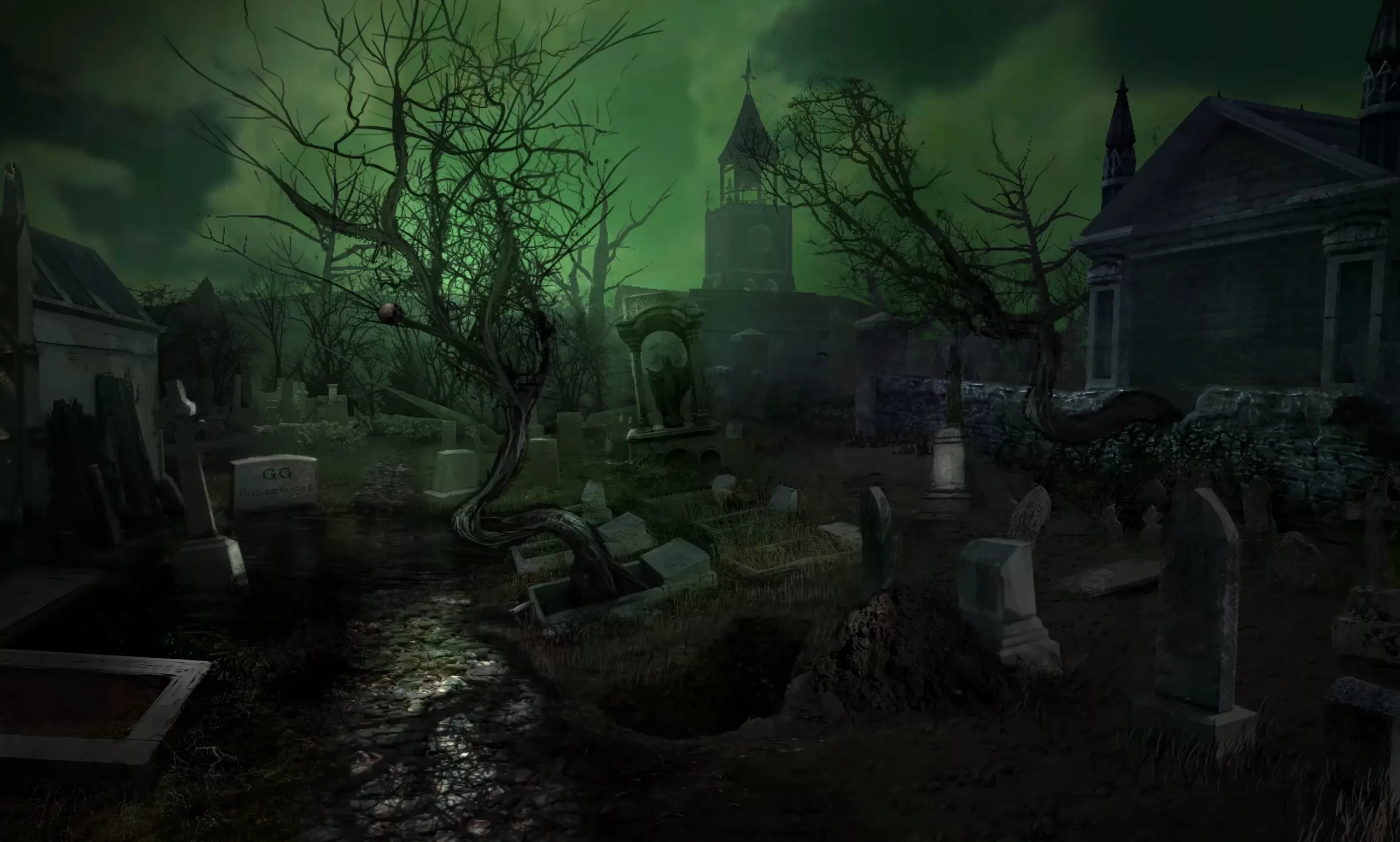
The game has already done hotels, libraries, museums, and public chaos. A cemetery at the end feels right because it carries a built-in sense of reckoning. It is a place of death, memory, and buried history, which makes it a natural stage for a Ghostbusters climax tied to spiritual backlog and supernatural overflow.
That is why the setting helps so much. It gives the finale a mood beyond simple destruction.
What people remember
People remember the endgame because it finally lets the campaign’s biggest ideas collide. Shandor’s scheme, the city’s ghost buildup, the Gozerian thread, and the dangerous logic of the containment grid all start pushing on each other at once.
The result feels larger than a normal level-by-level finish. It feels like the story bringing its whole burden to the surface.
The chapter’s payoff
Central Park Cemetery lands because it feels earned. The game spent hours building pressure, seeding unease, and widening the supernatural problem. When the finale finally turns those threads into open crisis, it feels like a payoff instead of a scramble for bigger explosions.
The chapter holds up because it feels earned. It is big, yes, but it is also the shape this story was always heading toward.
Be the first to comment