
Checking Out the Library is a smart follow-up to Panic in Times Square because it pulls the campaign back inward without making it feel smaller.
Times Square is loud. It is public. It is impossible to ignore. The library chapter changes the air. The game goes from open-city spectacle back to eerie interior Ghostbusters business, and that shift is exactly what the campaign needs.
Quick guide links
- Realistic / HD Campaign / Walkthrough for the full mission map on this branch.
- Realistic / HD Version Guide if you want the bigger branch overview.
- Level 4 transcript if you want the dialogue and cutscene order for this chapter.
- Tools of the Trade and Tips for Rookie Ghostbusters if a gadget gate, boss, or combat stretch is slowing you down.
- Previous chapter: Panic in Times Square
- Next chapter: Museum of (Super)Natural History
Playable walkthrough
The realistic library chapter keeps changing mood, but the route stays surprisingly coherent. First you chase the Librarian through the reading rooms and stacks, then you work through the hidden passages below, and finally you survive the ghost-dimension stretch long enough to put Azetlor down.
Before you start
- Swap between Shock Blast, the P.K.E. tools, and Boson Darts often. This chapter rewards quick tool changes more than almost any earlier mission.
- When the library gets weird, assume the answer is in the room you are standing in: a hidden shelf, a moving stack, a book stand, or a breakable obstruction.
Step-by-step walkthrough
- Start the chase by investigating the downstairs case and following the busted gate route. After the lion-statue setup and the Stasis Stream briefing, return to the lower floor, inspect the ectoplasm and the display case on the right, then move through the gate the ghost breaks open behind the left-side columns.
- Fight the first Book Golem in the reading room by circling wide and slowing it constantly. Stay out on the floor rather than backing into a dead corner, use Stasis or direct fire to keep it from closing the gap, and once it weakens enough, rip the lantern-like head loose with the Capture Stream instead of wasting extra shots on the body.
- Move behind the far counter and keep following the Librarian’s freshest exit. Check the counter at the far end of the room, go through the opened side door, and accept that she is going to shush you and vanish again. The library keeps using that vanish as its breadcrumb system.
- When the moving shelves separate you, take the leftward openings and let the room finish shifting before you sprint. The stacks are more linear than they look. Follow the active gap, clear the first ghost when it appears, and keep pressing toward Microfilm, Reprints, and Archives instead of trying to clear every dead aisle.
- Use the Authorized Personnel route to advance the mid-library chase. Exit the stacks, read the black-slime room as a warning rather than your current destination, scan the purple residue near the far end of the hall, and go right into the room with folding tables and boxes. Blow the clutter apart, scan the book drop, and clear the Book Bats so the main ghost finally has to show itself.
- In the paper-heavy rooms, fight from the doorway when you can. The Paper Constructs are much easier when they funnel toward you instead of surrounding you. Hold the entry corridor, clear them with Shock Blast, then move into the Reference and Periodicals stretch only after the pressure eases.
- In Children’s Reading, follow the bear and the room’s obvious visual joke. When the small door only opens partway, blast the obstruction, check the bear on the chair, and follow it to the big tree in the back corner. That moment is the chapter telling you it is done being subtle.
- Outside Special Collections, clear the simple environmental blockers before you overthink the route. Pull the chair away from the side door for the optional room, regroup, then use the P.K.E. Meter to find the hidden shelf passage on the back-right side of the room.
- In the larger ritual room, climb the enemy ladder instead of treating it as one endless fight. Clear the Book Bats, then the Paper Constructs, then the Book Centurions, and finally the heavier spirit that has to be captured. The room opens once you stop trying to solve every wave at the same time.
- At the beam-blocked exit and watery stairwell, finish the physical chores fast. Move the big beams out of the way, break the remaining boards, flip the switch upstairs, and then take the Book Golem fight in open circles so it cannot pin you against the walls.
- In the furnace section, treat the Coal Golems and black-slime barrier as a two-step gate. Beat the golems, then immediately blast through the black-slime-weakened wall and use the Slime Blower in the tunnel. That push is what finally gets you to the Librarian’s real chamber.
- Break the Librarian’s shield by destroying the floating stands first. Do not tunnel on her body while the stands are up. Sweep the support objects away, hit her once the shield drops, and trap her cleanly when the window opens.
- In Ghostworld, keep choosing the portals that move you deeper instead of trying to map the whole place. Clear the first Book Golem, work the bridge and Slime Tether sections as straightforward navigation puzzles, then push through the Cultists, Constructs, and flying-book hazards room by room. The stairs-and-books escape is just timing and nerve: wait for the opening, run, take cover, then go again.
- Against Azetlor, use the room’s props and weak points instead of pecking away with basic fire. Strip the black slime off the mask, tear the mask away with the Capture Stream, then unload on the glowing eye. When the fight cycles, throw or return the loose book masses at him, rip off an exposed tongue whenever he is stunned, and clean the summoned support enemies between boss windows so they do not bury you.
What usually trips players up
- The library’s fake complexity comes from presentation. Most “where do I go?” moments are solved by one hidden shelf, one opened gap, or one obvious object that needs to be scanned or moved.
- Azetlor goes down much faster once you stop treating him like a standard beam-and-trap ghost. The arena is built to be used against him.
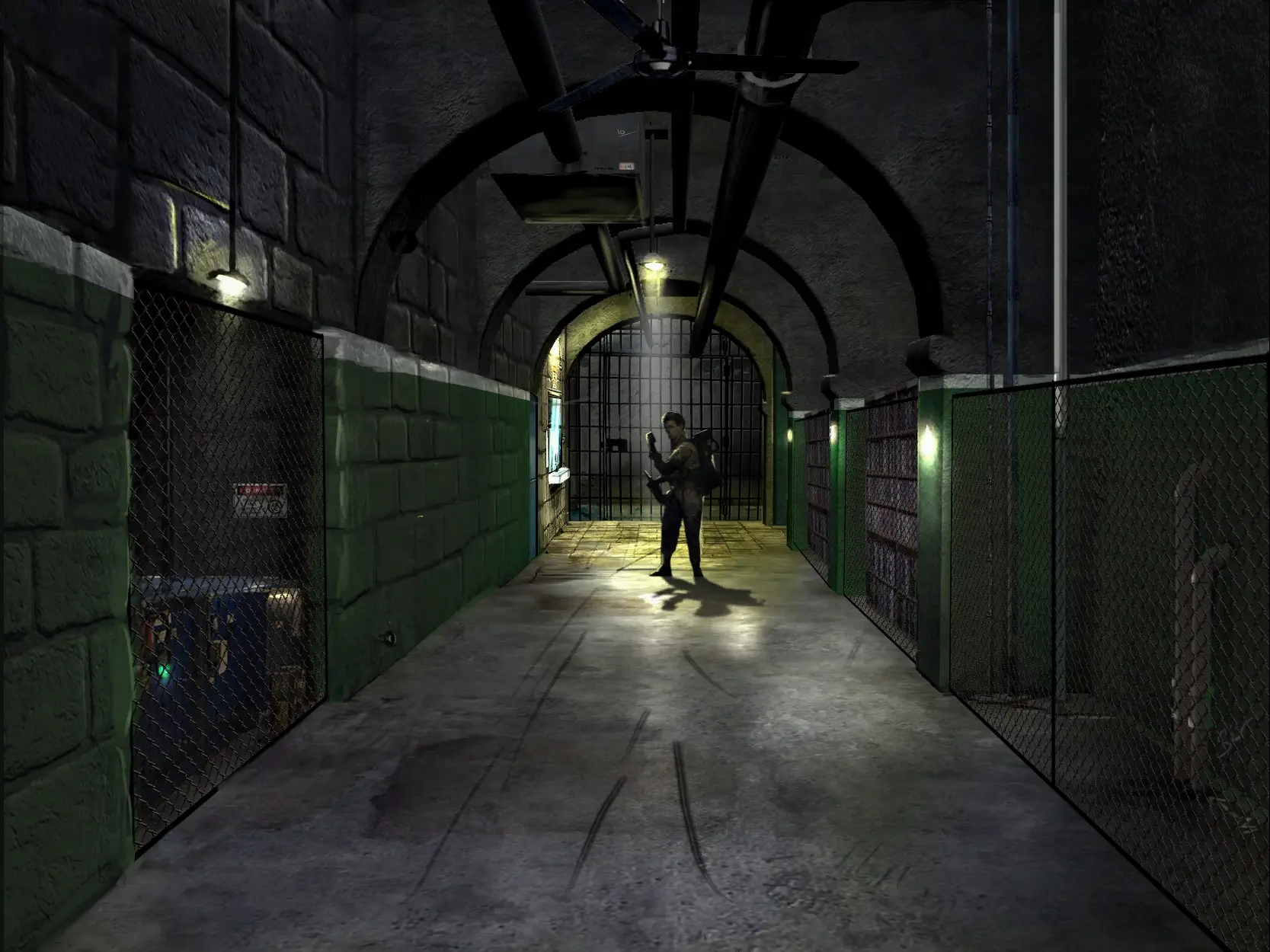
The library chapter
The New York Public Library has been part of Ghostbusters DNA since the beginning, so the game does not have to work hard to make the location feel important. The place already carries its own atmosphere. Tall rooms, old stacks, hushed spaces, and the sense that history is sitting in every corner do a lot of the work before a ghost even shows up.
That difference lands immediately. The threat is no less real, but it is wrapped in a calmer, stranger mood.
Where it sits in the campaign
The campaign needs rhythm. If every mission tried to top the last one in raw noise, the whole thing would burn itself out. The library chapter understands that. It cools the temperature just enough to let the supernatural side breathe again, and it reminds us that Ghostbusters works best when mystery, mood, and investigation stay in the mix.
That makes the chapter feel like a reset in the good sense. The story is still escalating, but it is not trapped in a single pitch.
Why the library chapter works
- how quickly the library puts the campaign back into haunted-investigation mode
- how much atmosphere the setting carries before the action really starts rolling
- how the chapter reconnects the game to one of the franchise’s oldest and strongest locations
- how the story keeps tying current ghost trouble to deeper history under the city
The setting itself
A lot of Ghostbusters material works hardest when the team enters a space that already feels spiritually unsettled before the proton packs come out. The library is perfect for that. It is old enough to feel layered, grand enough to feel cinematic, and familiar enough that the player brings some Ghostbusters memory into it before the chapter even begins.
The game takes advantage of all of that without leaning only on nostalgia. The library does more than remind people of the movie. It helps carry the story’s darker undertones.
What people remember
People remember Checking Out the Library because it taps into a very specific Ghostbusters mood. It is not built around the kind of giant public chaos that makes Times Square memorable. It is built around dread, atmosphere, and the pleasure of seeing the team back in one of their most natural supernatural habitats.
That makes it one of the chapter’s best strengths. It does not need to shout to stay in people’s heads.
The chapter’s payoff
Checking Out the Library works because it restores some shadow and quiet to the campaign right when the story needs it. After the blast of Stay Puft and public spectacle, the game proves it still knows how to do candlelit weirdness, haunted architecture, and that old Ghostbusters mix of humor and dread.
That is a big part of why the campaign holds together so well. It knows when to go big, and it knows when to lower its voice.
Be the first to comment